
A Wife’s Phone
Play A Wife’s Phone
A Wife’s Phone Screenshots
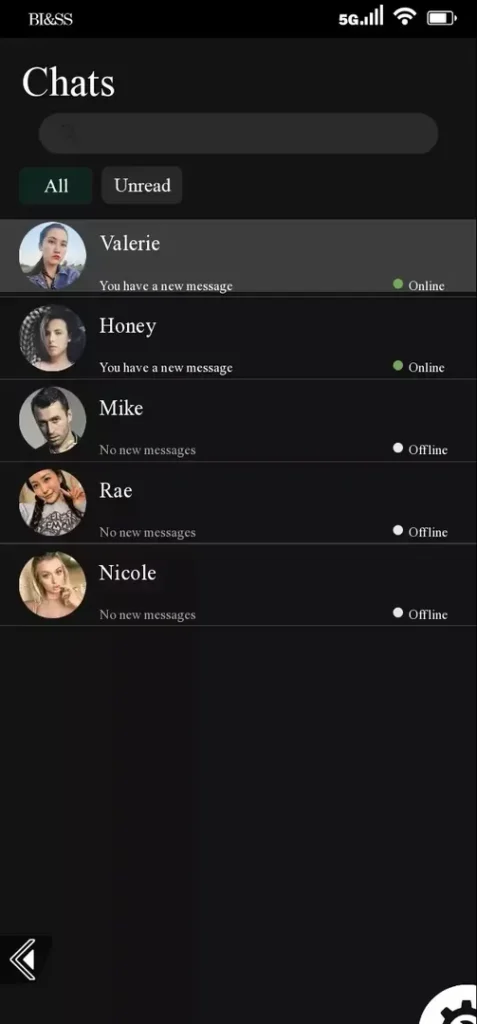

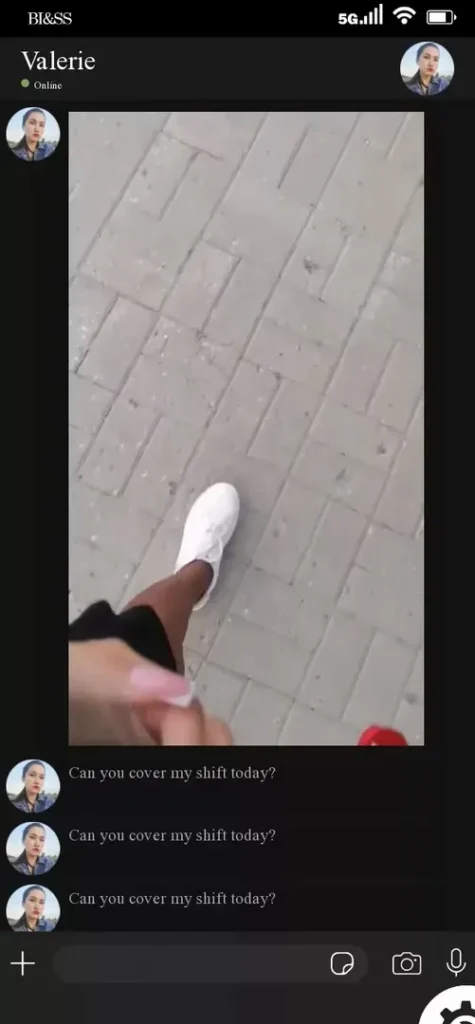


A Wife’s Phone review
A focused guide to the narrative simulator ‘A Wife’s Phone’ — gameplay, themes, tips, and player insights
A Wife’s Phone is an interactive narrative simulator that places you inside the smartphone of a married woman, letting you piece together her story through messages, photos, calendar entries and app data — a setup that rewards curiosity and careful reading while provoking strong emotional reactions. This article digs into the game’s core mechanics, story beats, themes, and practical play strategies, and shares personal impressions from several play sessions to help you decide whether this style of intimate, evidence-driven storytelling appeals to you. If you like slow-burn narrative exploration and moral ambiguity, this game offers a compact but powerful experience.
What Is ‘A Wife’s Phone’ and How Does It Work?
So, you’ve heard about A Wife’s Phone game and you’re curious. What is it, really? And more importantly, how on earth do you play something like this? 🤔 If you’re picturing running, jumping, or shooting, you’ll need to reset those expectations. This isn’t that kind of digital playground. Instead, welcome to the quietly intense world of the interactive narrative simulator.
Think of it less as a “game” in the traditional sense and more as a piece of interactive fiction you uncover, piece by delicate piece. Your entire experience happens through the screen of a smartphone that isn’t yours. Your goal isn’t to win, but to understand. The core gameplay mechanics in A Wife’s Phone are built on a simple, powerful premise: exploration is the action, and attention is your most important tool.
What type of experience is ‘A Wife’s Phone’?
At its heart, A Wife’s Phone is a masterclass in minimalist storytelling. It belongs to a growing genre sometimes called the found phone game, where the player’s interface is a fully realized, fictional smartphone. You are not a character with a name or a face. You are… an observer. A digital archaeologist. Maybe even an intruder. 👁️
The experience is built on a sense of intimate discovery. There’s no narrator guiding you, no objective markers flashing on the screen. The story of a person, a marriage, and a life is told entirely through the digital artifacts left behind: text messages heavy with unspoken tension, calendar entries that hint at secret plans, photo albums filled with smiles that may or may not reach the eyes, and social media posts crafted for public consumption. The genius of this interactive narrative simulator is that it trusts you, the player, to connect the dots. The tension doesn’t come from a jump scare or a boss fight; it simmers in the gap between what is said in a text and what is painfully left unsaid.
If you’ve ever enjoyed narrative experiences like A Normal Lost Phone or Bury Me, My Love, you’ll recognize the familiar, compelling format. A Wife’s Phone game takes this concept and focuses it laser-sharp on the complexities of a domestic relationship, creating a space that feels both incredibly specific and universally relatable in its themes of trust, secrecy, and the masks we wear.
How the interface and core mechanics operate
Learning how to play A Wife’s Phone is delightfully straightforward from a technical standpoint, but deeply complex emotionally. The moment you start, you are presented with a locked phone. Often, discovering the passcode is your first small puzzle—a clue might be in an email subject line or a memorable date mentioned somewhere. This initial step immediately frames the entire experience: you are unlocking something private.
Once in, you are free to navigate a strikingly authentic smartphone interface. The gameplay mechanics A Wife’s Phone employs are all about tapping, scrolling, and reading. There are no timers, no fail states. Here’s a breakdown of your primary tools for investigation:
| Icon / App | Your Action | The Story It Tells |
|---|---|---|
| Messages | Read full threads with contacts like “Husband,” “Mom,” “Sarah,” “David.” | The core narrative. Watch language change over time, note response delays, and read between the lines of every “I’m fine.” |
| Photo Gallery | Scroll through images, check timestamps, and sometimes examine details within photos. | Visual history. Pay attention to who is in photos, who is missing, the settings, and the genuine (or forced) nature of smiles. |
| Calendar | Check entries for appointments, reminders, and personal notes. | The blueprint of a life. Cross-reference dates with messages and photos. An entry marked “Dinner with work friends” might tell a different story than a text message. |
| Social Media | Scroll through a simulated feed, look at profiles, and read public comments. | The curated self. Contrast the perfect public face with the private conversations in the messaging app. |
| Email & Notes | Open emails from businesses, receipts, and personal notes or drafts. | The paper trail. Find booking confirmations, purchase receipts, or unsent emotional notes that reveal hidden truths. |
Your interaction is purely exploratory. You tap an app icon, you read its contents. The “challenge” lies in your own curiosity and deductive reasoning. Why did she cancel that appointment? 📅 Who is this person she’s texting but never mentions in photos? The game doesn’t flash a big “CLUE FOUND” notification. It just presents the evidence. It’s up to you to be the detective, the judge, and the empath.
Pro Tip: Don’t just read messages in isolation. Have the calendar open in your mind’s eye as you read texts. A message saying “Stuck at work late” takes on new meaning if the calendar shows a dinner reservation for two that same night.
What to expect in length, tone, and player agency
Session Length: One of the beautiful things about this interactive narrative simulator is its respect for your time. A single playthrough, if you’re thorough, typically lasts between 30 to 90 minutes. It’s the perfect length for one compelling, emotionally immersive evening. You can rush through it in less time, but you’ll miss the subtle textures that make the story resonate. This isn’t a 100-hour epic; it’s a powerful short story you live inside.
Tone & Atmosphere: Prepare for a mood that is intimate, ambiguous, and often emotionally charged. 🫂 The tone is rarely explicit; it’s crafted through implication and subtext. You might feel a growing sense of unease, a pang of sadness, or a flash of anger—all triggered simply by reading a coldly polite text exchange. The sound design (often minimal: notification chimes, keyboard taps) and a subtle, somber soundtrack deepen this feeling of quiet voyeurism. It’s a story that sits with you long after you close the app.
Player Agency: This is a crucial point. Your agency in A Wife’s Phone game is not about making choices that change a branching plot. There is no “good” or “bad” ending you select via dialogue options. Instead, your agency is about the depth and direction of your investigation. You choose which app to open first. You decide which message thread seems most suspicious. You piece together the timeline.
The story is fixed, but your path to uncovering it and your personal interpretation of the events are uniquely yours. This is the genius of the found phone game format. Two players might access the same set of digital facts, but walk away with subtly different understandings of the characters’ motivations. Your only limit is the boundary of the phone’s screen—you can’t call a number that isn’t saved, you can’t see events that weren’t digitally recorded.
I remember the first time I tapped open the main message thread in a playthrough. My cursor hovered over the icon, and I actually felt a twinge of guilt. 😳 This wasn’t my business. But as I read the stilted, daytime exchanges about grocery lists, contrasted with the glaring absence of messages at night, a story began to form in the silence between the words. That feeling—of uncovering a private truth I wasn’t sure I wanted to know—was the gameplay. It shaped my entire engagement, making me scrutinize every emoji and punctuation mark, not because the game told me to, but because I needed to understand.
Accessibility & Technical Notes: Thankfully, diving into this experience is hassle-free. A Wife’s Phone is designed to be accessible on most modern systems. You’ll typically find it on PC via stores like Steam or itch.io, and often on mobile devices (iOS/Android) for the most authentically tactile experience—after all, you’re poking around a phone, on your phone! 📱
The system requirements are minimal; if your device can run a basic video player and a web browser, it can almost certainly run this interactive narrative simulator. Most versions feature a simple save/resume system, often autosaving your progress as you explore, allowing you to close the app and return right where you left off, which is perfect for its digestible session length.
In the end, how to play A Wife’s Phone is simple: come curious, pay attention, and be ready to feel. You are not just playing a game; you are holding a mirror to a fragmented life and being asked to look closely.
A Wife’s Phone is a compact, emotionally charged interactive narrative that asks players to become digital detectives of a private life. Through realistic interface elements and carefully placed artifacts, the game rewards patience, careful note-taking, and an openness to ambiguous moral questions. Whether you play for the story, the investigation, or the emotional experience, the game delivers a focused single-session journey that lingers afterward. If this approach appeals to you, give it a try, and consider sharing your interpretations with others — compare notes, discuss alternate readings, and explore how different players piece the same fragments together.